Moving goods between different countries involves much more than choosing a single mode of transport. The same operation can involve a vessel, a train, a truck or even an aircraft, together with different terminals, customs procedures and connection points.
When these legs are managed independently, contracts and responsibilities also become fragmented. Multimodal transportation takes a different approach: combining two or more modes of transport within a single operation, under one single transport contract and one single responsible operator.
This model makes it possible to centralise management of the shipment even when the goods change mode during the journey. It is particularly relevant in international supply chains, for example when components from Asia reach Europe by sea and complete their journey by road, or when a shipment combines rail freight and maritime transport to reach its destination.
Grupo Suardiaz approaches this type of operation from its dual position as a shipowner and door-to-door logistics operator, coordinating different modes of transport within a single logistics chain.
The meaning of multimodal transport and who manages it
Multimodal transportation involves moving goods using two or more different modes of transport, such as sea, road, rail or air, under a single contract and with a single operator responsible for coordinating the entire operation.
The main feature, therefore, is not simply the combination of several modes of transport. What truly defines the multimodal model is that the client does not need to contract and manage each leg of the journey separately.
This responsibility falls to the Multimodal Transport Operator (MTO), who takes on responsibility to the client for managing the operation from the agreed point of origin to the destination, even when different modes of transport are involved along the way.
At international level, one of the main precedents for defining this model was the United Nations Convention on International Multimodal Transport of Goods, adopted in Geneva in 1980. Although it never entered into force due to insufficient ratifications, it established the conceptual foundations of multimodal transportation.
Later, the UNCTAD/ICC Rules for Multimodal Transport Documents, published in 1992, developed a contractual framework used as a reference for this type of operation. These rules underpin the FIATA Multimodal Transport Bill of Lading (FBL), one of the documents used in practice by multimodal transport operators.
For a company that needs to transport goods between different countries, this model simplifies the contractual relationship: instead of negotiating individually with each carrier, it has a single point of contact responsible for coordinating the whole journey.
Multimodal transportation vs. intermodal transport: the difference that defines responsibility
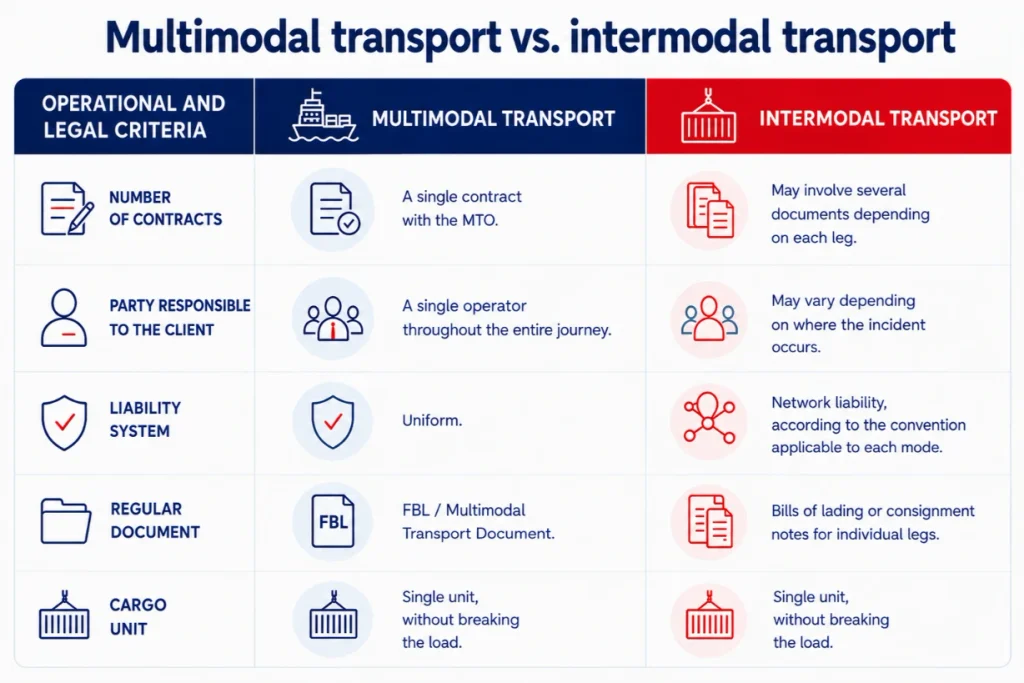
The terms multimodal transportation and intermodal transport are often used interchangeably, since both combine different modes of transport within the same journey. However, there is an important difference in how the operation is organised and, in particular, in how responsibility is structured.
In multimodal transportation, there is a single contract with the MTO, who acts as the responsible party before the client for the entire journey. This means the shipper maintains a single contractual relationship even though the goods travel successively by ship, train or road.
In intermodal transport, two or more modes are also used, and the goods can remain within the same loading unit, such as a container or swap body, avoiding handling during transshipment. However, the different legs may be subject to different documents and liability regimes depending on the mode of transport used.
This difference becomes especially important when an incident occurs. In a multimodal operation, the client’s point of reference is the operator with whom the transport was contracted. In an intermodal structure with segmented responsibilities, the applicable regime may depend on the specific leg where the damage or delay occurred.
The difference, therefore, does not lie solely in which modes of transport are used, but in how the operation is structured contractually and who takes responsibility before the client.
Types of multimodal transportation by combined modes
The most suitable combination depends on factors such as the type of goods, their volume, the origin and destination, or the urgency of the shipment. An operation may integrate sea and road transport, combine air and road, or use rail for certain long-distance legs.
The key lies in designing the route as a single logistics chain, coordinating the connections between the different modes so that each one meets the specific needs of the goods.
Sea and road transport (RoRo)
Combining sea and road transport allows the first leg to be covered by road to the port of origin, the cargo to then be loaded onto a vessel, and the journey to continue by road again from the port of destination to the delivery point.
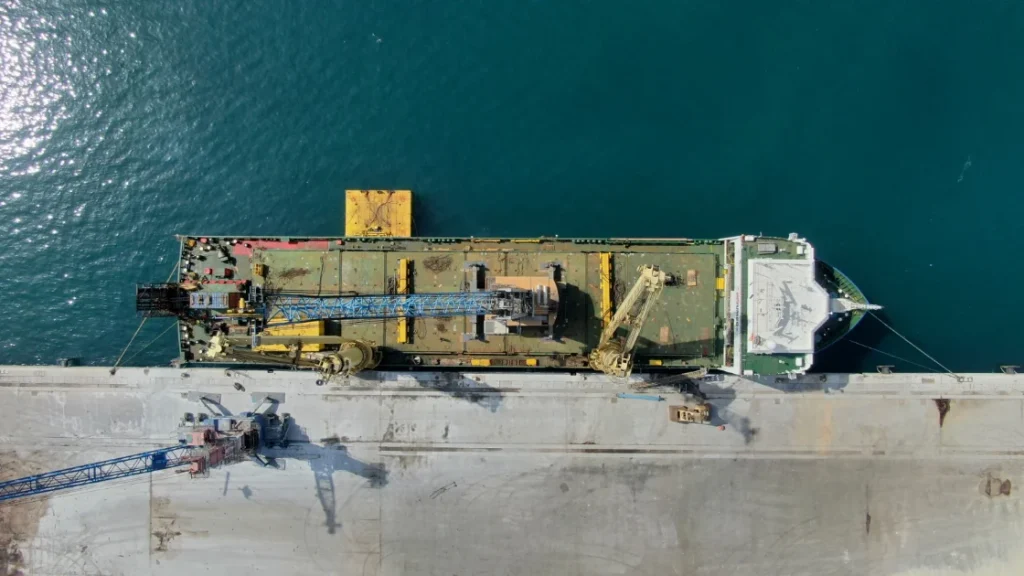
In RoRo (roll-on/roll-off) operations, vehicles or wheeled cargo units access the vessel via ramps, which makes it easier to transfer them between the road and sea legs.
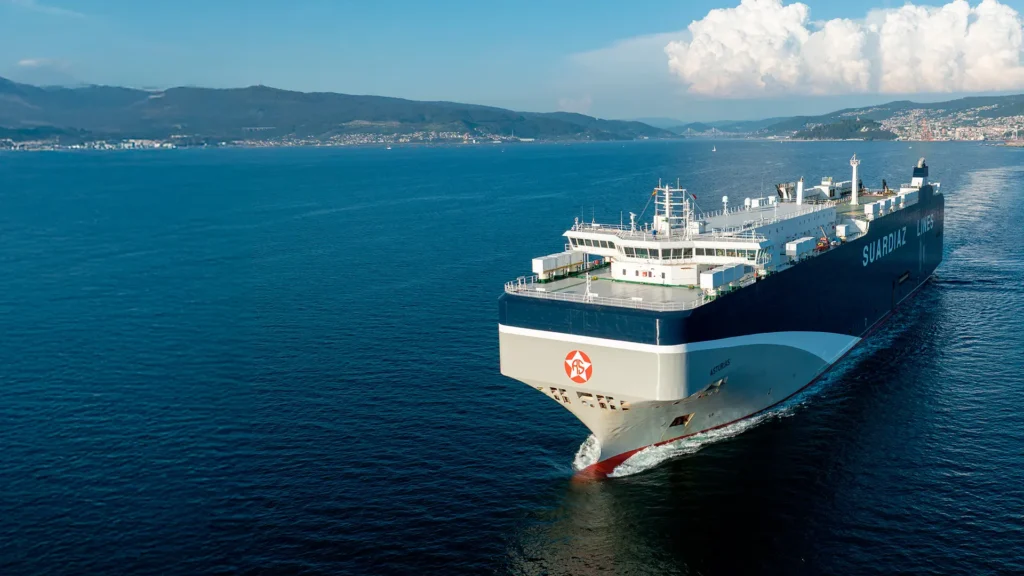
This combination is particularly relevant in the automotive sector, where large volumes of vehicles and wheeled cargo need to be transported between different markets. Grupo Suardiaz operates, through Suardiaz Shipping Lines, its own fleet specialised in this type of transport.
Air and road transport
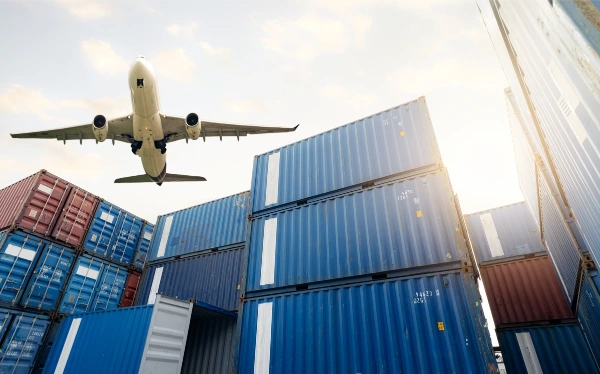
When the priority is to reduce transit time, air freight can be combined with road transport to cover the entire journey from origin to destination.
The aircraft covers the international leg, while road transport connects the collection point with the departure airport and later handles distribution from the arrival airport.
This combination is particularly suited to urgent or high-value goods, such as electronic components or spare parts that are critical to a production line, where a supply interruption can have a considerable operational impact.
Sea and rail transport
Combining sea and rail transport is especially suitable for moving large volumes of goods over long distances. The sea leg connects international markets, while rail supports the continuity of land transport along certain corridors.
Besides its capacity to carry large volumes, rail can also help reduce emissions compared with road transport over long journeys, so its integration within a multimodal operation can also support sustainability goals.
In this area, Grupo Suardiaz maintains an investment strategy linked to reducing the environmental impact of its operations. Its initiatives include a 200 million euro investment in two latest-generation car carriers, with capacity for 5,500 vehicles and dual propulsion using Liquefied Natural Gas (LNG).
Intercontinental multimodal transportation
When the origin and destination are on different continents, a single operation may need to combine several modes of transport. For example, a shipment may leave Asia or the Americas by sea and later complete its journey in Europe by rail or road.
These operations require precise coordination between the different legs, particularly at connection points and in managing the documentation associated with passing through different countries.
The operator’s international presence becomes particularly important in this type of logistics chain. Grupo Suardiaz has a presence in Europe, Africa and the Americas, which makes it possible to handle operations that connect different markets and modes of transport.
Risks and responsibility: what to watch for in a multimodal operation
Working with a single operator simplifies the management of a multimodal operation, but it does not remove its complexity. The more modes of transport and countries involved, the greater the need to properly coordinate the different points along the journey.
One of the critical moments is transshipment between one mode of transport and another. A delay in the arrival of a vessel, a train or a truck can affect the next connection and disrupt the planning of the rest of the journey.
Documentation also requires special attention. When goods pass through different countries, different customs procedures and requirements may apply, which is why it is essential to prepare the necessary documentation in advance to avoid incidents along the way.
It is also important to select the right Incoterms to govern the commercial transaction. Rules such as CPT (Carriage Paid To) or CIP (Carriage and Insurance Paid To) can be used with any mode or combination of modes of transport. FOB (Free On Board) and CIF (Cost, Insurance and Freight), on the other hand, are intended exclusively for sea and inland waterway transport.
In this context, having a single MTO makes it possible to centralise the contractual relationship and responsibility before the client, rather than managing the different operators involved along the journey independently.
Multimodal transportation for sectors with special needs
Multimodal transportation becomes particularly important when the characteristics of the goods require a specific logistics chain to be designed. In these cases, it is not enough to simply connect different modes of transport: each leg must be coordinated taking into account the dimensions, storage conditions, documentation and handling requirements of the cargo.
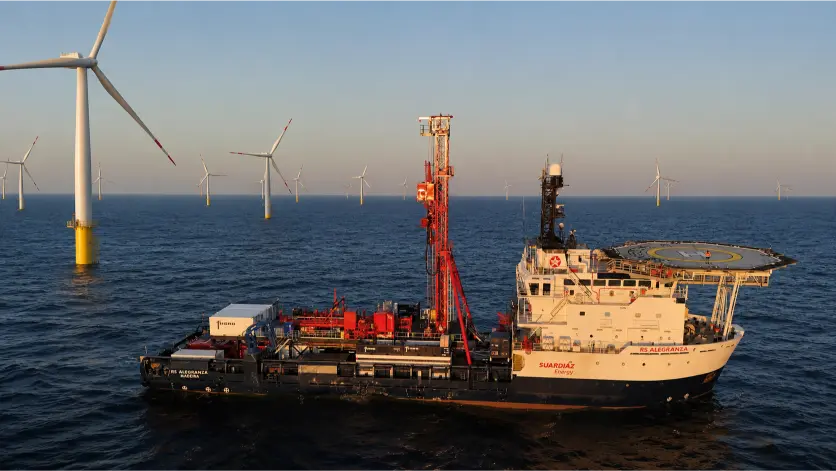
In industrial and energy projects, for example, moving wind turbines, heavy machinery or oversized components may require combining sea and rail transport with other road legs. These operations require detailed planning of stopovers, routes and permits in the different transit countries.
Goods requiring controlled temperature present another type of challenge. Perishable products and certain cosmetic products may require reefer solutions capable of maintaining the necessary conditions throughout the different stages of the journey.
This operational complexity is compounded by customs management when the route crosses different borders. Properly coordinating the various procedures is part of the planning needed to maintain continuity of the operation.
Why manage your multimodal transportation with Grupo Suardiaz
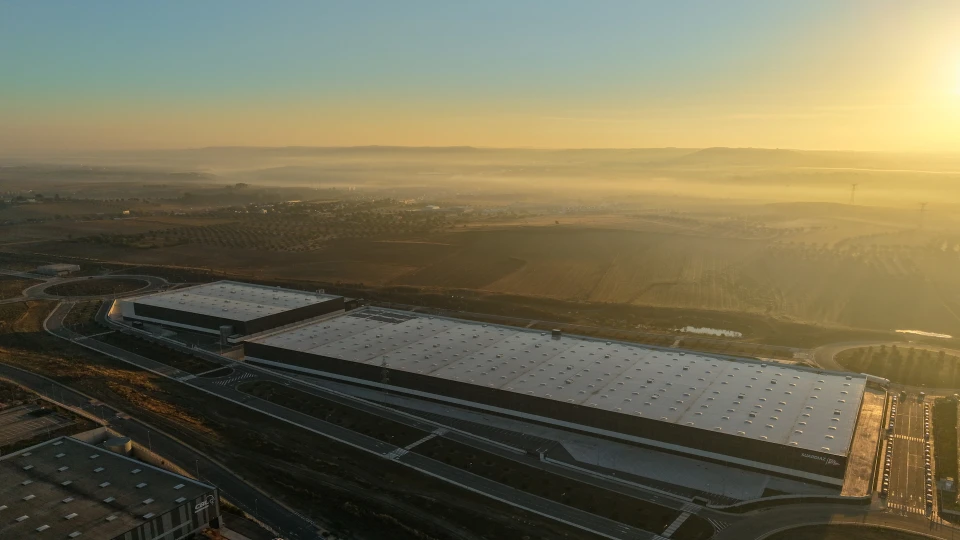
Managing a multimodal operation requires coordinating different modes of transport, connection points and documentary procedures within a single logistics chain. Grupo Suardiaz combines its position as a shipowner since 1943 with its activity as a comprehensive logistics operator, bringing operational knowledge of the different legs that can form part of an operation.
Its door-to-door capability integrates different transport solutions, combining sea, road, rail and air transport according to the characteristics of each operation. For road transport, Grupo Suardiaz has a fleet of more than 270 semi-trailers.
In the customs field, Grupo Suardiaz holds the status of Authorised Economic Operator (AEO) and has customs warehouses in different parts of Spain, as part of its customs management services.
Grupo Suardiaz also continues to invest in solutions aimed at reducing the environmental impact of its operations. These include the incorporation of two car carriers powered by dual LNG technology.
This international presence is complemented by agents such as Somaloir in France and by the representation of CNAN EL DJAZAIR in Spanish ports, reinforcing the Group’s international reach across Europe, Africa and the Americas.
This combination of capabilities makes it possible to approach multimodal transportation from a comprehensive perspective, coordinating different logistics solutions within a single operation.
In short, multimodal transportation makes it possible to move goods between different countries and modes of transport while maintaining a single contractual relationship and a single responsible operator. For companies, this makes it easier to coordinate international operations involving different modes, connection points and documentary requirements.
Choosing the right transport combination and planning each leg is especially important when working with large volumes, goods with specific requirements, or complex international supply chains. Having an operator capable of coordinating the entire journey makes it possible to centralise management of the operation from start to finish.
Request information today to design a multimodal transportation solution tailored to your operations. Call us or email us!