Warehouse logistics covers all the processes involved in managing goods inside a warehouse: from receiving and organizing stock to order preparation and dispatch. It is not simply about storing products. It is about optimizing the flow of goods to improve efficiency, reduce costs and ensure fast, accurate deliveries.
Professional warehouse management helps companies reduce costs, improve traceability and increase operational responsiveness. To achieve this, it is essential to design a warehouse layout that minimizes unnecessary movement, use technology such as warehouse management systems (WMS) to gain real-time visibility, improve critical processes such as picking, apply inventory best practices such as FIFO or ABC classification and, when volumes justify it, introduce automation.
In an increasingly demanding logistics environment, the logistics storage warehouse has become a strategic point within the supply chain. Its performance affects transport, planning, customs, distribution and customer service.
In this guide, we explain what warehouse logistics is, what functions it performs, the main types of warehousing in logistics and how to optimize this part of the operation to improve efficiency across the entire supply chain.
What is warehouse logistics and why is it important?
Warehouse logistics includes all the processes required to receive, locate, preserve, control and dispatch goods within a warehouse. Its purpose is to ensure that products are available in the right place, in the right condition and at the right time.
This function should not be seen as an isolated activity. Warehousing is connected to procurement, production, transport, distribution, international trade and customer service. As a result, any inefficiency in the warehouse can affect the entire logistics operation.
A well-designed warehouse operation makes it possible to control inventory more effectively, reduce unnecessary movements, improve material flows and speed up order preparation. It also helps lower operating costs and coordinate goods more efficiently with transport and distribution requirements.
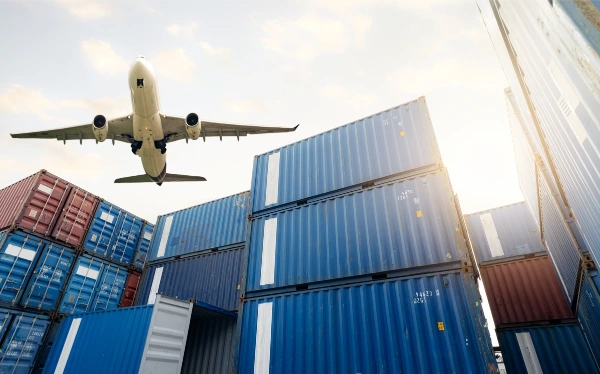
In international operations, its importance increases even further. Warehousing and storage may be linked to customs procedures, cargo consolidation, multimodal transport, port operations or national and international distribution.
For this reason, many companies are no longer looking for warehouse space alone. They are looking for warehousing and logistics solutions that connect infrastructure, technology, documentation, transport and traceability within a single operation.
Main functions of warehousing logistics
Warehousing logistics performs several critical functions for business operations. Each one has an impact on costs, timelines, stock visibility and service quality.
The first function is goods receiving. At this stage, incoming products are checked against the documentation, their condition is reviewed and they are registered in the management system. Accurate receiving prevents later errors and maintains traceability from the first point of control.
The next step is stock location and organization. Not all products should be stored in the same way. High-turnover items should be placed in accessible areas, while slower-moving references can be located in secondary areas. This decision affects productivity, labour efficiency and preparation speed.
Another essential function is inventory control. A company needs to know what goods it has, where they are located, in what quantity and under what conditions. Without this information, it is difficult to plan purchasing, avoid stockouts or coordinate distribution.
Order preparation is one of the most sensitive warehouse processes. It includes selecting, grouping, checking, packing and preparing products before dispatch. An error at this stage can lead to returns, delays, penalties or a loss of customer confidence.
Finally, warehousing logistics includes goods dispatch. This stage connects the warehouse with transport. Coordination between loading docks, documentation, routes, loads and schedules is essential to avoid waiting times, duplicated tasks and unnecessary costs.
Storage is not a passive activity. It is an active part of the supply chain and directly affects the efficiency of the entire operation.
Types of warehousing in logistics
There are different types of warehousing in logistics, and choosing the right model depends on factors such as the type of products, volume, turnover, temperature requirements, handling needs and expected service level.
A company handling high-volume products will not have the same requirements as a business managing varied SKUs, sensitive goods, international cargo or customs requirements. That is why warehousing and storage models should always be assessed from both an operational and business perspective.
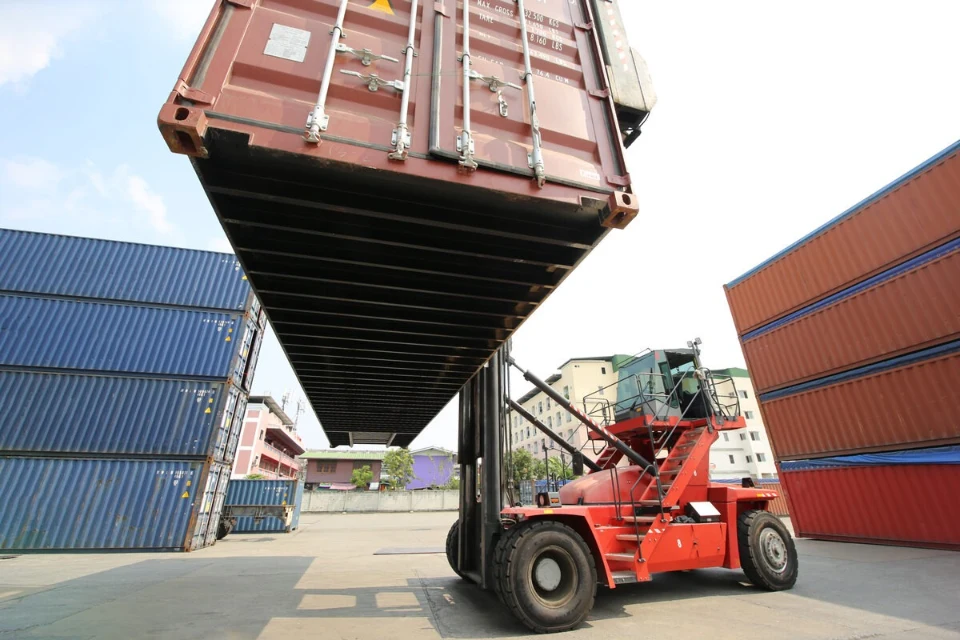
- Conventional warehousing is one of the most widely used models. It is based on racking, identified locations and handling equipment. It is suitable for palletized goods, operations with many SKUs and companies that need flexibility.
- Block storage involves placing goods directly on the floor or in designated areas, often stacked. It is usually used for homogeneous, resistant and high-volume products. It makes good use of space, although it can limit direct access to specific units.
- Compact storage is designed to maximize available capacity. It is useful when managing large volumes of similar products and when the aim is to optimize every square metre of warehouse space.
- Dynamic storage uses systems that facilitate the movement of goods inside the warehouse, such as rollers, gravity-based systems or automated solutions. It is common in high-turnover operations that require speed and efficiency.
- Automated warehousing incorporates technology to reduce manual tasks, improve accuracy and increase productivity. It can include stacker cranes, conveyors, sorting systems, radio frequency identification or advanced warehouse management software.
- Cold storage or temperature-controlled warehousing is used for goods that require specific conditions. It is common in food products, pharmaceuticals and certain industrial components. In these cases, ensuring that products remain in optimal condition is a priority.
- Customs or temporary storage is especially relevant in international trade. It allows companies to manage goods subject to documentation, inspections, import or export procedures and regulatory requirements.
These systems are not mutually exclusive. Many companies combine several warehousing models within the same operation to adapt to different products, channels, turnover rates and service levels.
Benefits of effective warehousing and storage management
Efficient warehousing and storage management delivers direct benefits in terms of costs, productivity and service quality. For many companies, this area can become a genuine competitive advantage.
The first benefit is cost reduction. Better warehouse organization reduces unnecessary movement, decreases errors, optimizes labour and prevents additional costs caused by urgent shipments, duplicated tasks or incorrect dispatches.
The second benefit is greater inventory control. Knowing what goods are available, where they are and what condition they are in helps companies plan purchasing, production, transport and distribution more effectively. This is especially important when managing multiple SKUs, several markets or international cargo.
Another key benefit is improved order preparation. A well-designed warehouse allows orders to be prepared faster and more accurately. This reduces incidents and improves customer service levels.
It also improves responsiveness. When warehousing is integrated with transport, customs and distribution, the company can react more effectively to changes in demand, delays, seasonal peaks or urgent requirements.
Finally, good warehousing logistics supports scalability. When processes are clearly defined, the company can handle new volumes, enter new markets, add product references or manage more complex operations without losing operational control.
How to optimize warehouse logistics
Optimizing warehouse logistics is not only about making better use of available space. It also involves redesigning processes, reducing unnecessary movements, improving stock visibility and connecting the warehouse with the rest of the supply chain.
The first step is to analyse material flows. In other words, how goods enter the warehouse, how they move inside it and how they leave for the next stage in the chain. When these flows are not properly defined, travel distances, downtime, errors and handling costs increase.
It is also important to classify products according to operational criteria. Turnover, volume, weight, value, fragility and storage conditions help determine where each reference should be located and which storage system is most appropriate.
Technology is another decisive factor. A good warehouse management system makes it possible to control inbound and outbound flows, locations, inventory, orders, batches and traceability in real time. This visibility reduces errors and supports better decision-making.
Optimization must also take transport costs into account. A well-located warehouse, connected to ports, rail terminals, main roads or airports, can reduce transit times and improve overall distribution efficiency.
It is also important to review the relationship between space, labour, equipment and service level. Sometimes the problem is not a lack of capacity, but an internal organization that no longer matches the growth or complexity of the operation.
From the traditional warehouse to the smart logistics centre
Historically, warehouses had a passive role: storing products and supplying them when required. Today, logistics centres operate as active distribution platforms, capable of managing multiple flows, preparing omnichannel orders, optimizing routes and keeping inventory synchronized with ERP systems in real time.
This logistics evolution has been made possible by the adoption of advanced technologies, such as warehouse management systems (WMS), voice or light-directed picking, RFID identification, predictive analytics and optimization algorithms that increase efficiency and reduce operational errors.
Automation in warehousing processes
One of the major trends in modern warehousing is process automation, which allows companies to handle higher workloads with fewer resources and greater accuracy. Robotics solutions such as AS/RS systems, autonomous mobile robots (AMRs) and robotic picking arms are redefining productivity standards.
These technologies not only improve efficiency ratios. They also reduce workplace risks and increase operational scalability, especially in high-turnover environments or during seasonal demand peaks.
Sustainability and energy efficiency in modern warehousing
Environmental responsibility is also transforming the warehousing model. New logistics platforms incorporate energy efficiency, renewable energy and emissions reduction measures as part of their design.
From LED lighting and motion sensors to solar panels, heat recovery systems and electric forklifts, sustainability best practices help reduce the environmental impact of operations and comply with increasingly demanding regulations.
Waste management, reusable packaging and storage space optimization are also key factors in reducing resource consumption and moving towards more responsible logistics.
When to work with a specialized logistics operator
Working with a specialized logistics operator, also known as a third-party logistics provider or 3PL, starts to make sense when the operation gains volume, complexity or a greater need for coordination.
This often happens when a company works with several modes of transport, needs to manage customs, operates with international goods, requires traceability, handles demand peaks or needs to reduce costs without compromising service.
In these cases, the warehouse is no longer just a physical space. It becomes part of a broader logistics solution where storage, transport, documentation, distribution and inventory control must work in a coordinated way.
A specialized operator can provide infrastructure, technology, qualified personnel, sector expertise and the ability to adapt the operation to each type of goods. It can also help improve planning, reduce incidents and connect warehousing with the rest of the logistics processes.
The key is to choose a partner that understands the entire operation. Not only the warehouse, but also lead times, costs, routes, procedures, risks and the real needs of the business.
Optimize your warehousing and logistics with Suardiaz Group
If warehousing is starting to affect your costs, timelines or service capacity, an end-to-end logistics solution can help you gain control. When this operation is integrated with multimodal transport, customs services, logistics infrastructure and distribution solutions, the warehouse becomes a strategic asset for the business.
At Suardiaz Group, we coordinate warehousing, multimodal transport and customs services to improve the efficiency of your supply chain. This approach allows us to design solutions adapted to each customer, each type of goods and each operational flow.
Optimize your warehousing and logistics with Suardiaz Group and turn your supply chain into a competitive advantage ¡Contact us!