Integrated logistics has become a structural driver of business competitiveness. In an environment shaped by globalisation, margin pressure and rising end-customer expectations, managing transport or warehousing as separate functions is no longer enough.
Companies leading their industries now operate through a coordinated, cross-functional model aligned with business goals.
Understanding this approach is essential for any logistics, operations or supply chain manager looking to reduce operating costs without compromising service levels.
What Is integrated logistics and Why is it so important for today’s businesses?
Integrated logistics is now understood as the coordinated and strategic management of all a company’s logistics processes, from raw material sourcing to final customer delivery, including warehousing, transportation, distribution, inventory management and information flows. It goes beyond a fragmented operational view and relies on the integration of people, technology and data to optimise overall supply chain performance.
This concept has evolved in response to an increasingly complex, competitive and fast-moving business environment. Globalisation, e-commerce growth, digital transformation and higher customer expectations have forced businesses to move from disconnected logistics operations to a more flexible, cross-functional and efficiency-driven model.
That is why businesses today need a global view of their logistics processes, enabling them to reduce costs, improve response times, minimise risk and make better decisions based on real-time information. Integrated logistics has therefore become a key factor in improving competitiveness, ensuring operational sustainability and delivering a consistent, high-quality customer experience.
The evolution of Logistics management: From siloed processes to a global view
For years, logistics was organised through separate departments. Transport, warehousing and customs often operated in parallel.
The usual result was clear: duplication, rising operating costs and poor coordination.
The shift towards integrated logistics responds to the need for end-to-end logistics management, from origin to final delivery. When a company controls the entire flow under a shared strategy, logistics stops being just a support function and becomes a source of competitive advantage. The difference is not about doing more, but about doing it in a more integrated and strategic way.
What does Integrated logistics management include?
Integrated logistics management covers all the processes required to plan, execute and control the flow of goods efficiently, from origin to final destination. Its goal is to optimise costs, reduce lead times and ensure supply chain reliability through the coordinated management of key activities.
Multimodal transport management
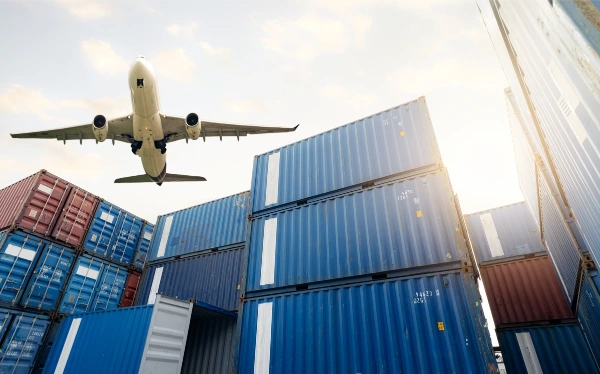
Multimodal transport is one of the cornerstones of integrated logistics. It makes it possible to combine sea, road, air and rail freight under a single planning framework. The key is not to choose the fastest or cheapest mode in isolation, but to design the most effective combination for each operation, balancing cost, transit time and reliability. Effective multimodal coordination reduces disruptions and improves the overall efficiency of the end-to-end logistics process.
Warehouse and inventory management
An effective integrated logistic system includes advanced inventory management aligned with business needs. This involves inventory control and optimisation, warehouse space management and the improvement of internal processes. Good warehouse and inventory management helps prevent stockouts, reduce unnecessary costs and ensure resources are used efficiently. Resource optimisation means finding the right balance through demand forecasting, continuous monitoring and data analysis.
Customs management and international compliance
In international trade, integrated logistics simplifies customs formalities and helps ensure compliance with current regulations. This reduces legal risks, prevents border delays and gives companies greater security when operating in global markets. A documentation error can lead to delays, penalties or unexpected additional costs. Integrating regulatory expertise into logistics operations reduces risk and provides legal certainty and operational stability. For businesses with an international footprint, this control is not optional. It is strategic.
Technology and supply chain visibility
Without advanced technology, there is no true integrated logistics. Management systems, real-time traceability and data analytics provide complete visibility across the supply chain. That visibility improves forecasting, speeds up decision-making and reduces the impact of disruptions. In practice, this is what gives real meaning to end-to-end logistics.
Main benefits of Integrated logistics for businesses
Integrated logistics has become a critical factor for companies seeking logistics cost reduction and supply chain optimisation. By managing transportation, warehousing, inventory and distribution as a single coordinated system, businesses improve operational efficiency and gain greater control over their logistics processes.
Lower operating costs and fewer inefficiencies
An integrated logistics strategy makes it possible to reduce operating costs by eliminating duplication and optimising every stage of the logistics process. Integrating activities improves cost control, minimises errors and removes inefficiencies in transport, warehousing and inventory management.
Optimised resources and Logistics processes
Process optimisation is one of the main advantages of integrated logistics. Through efficient planning and tighter control of the logistics chain, businesses can make better use of resources, improve internal coordination and increase operational productivity.
Better customer service and higher satisfaction
Integrated logistics has a direct impact on customer service quality. Optimised logistics management helps businesses meet delivery deadlines, reduce incidents and offer a more reliable experience, resulting in higher customer satisfaction and stronger commercial relationships.
Integrated logistics and supply chain management: A strategic relationship
Today, integrated logistics and supply chain management form a strategic alliance that is essential for business competitiveness. An end-to-end logistics management approach makes it possible to manage the supply chain holistically, from demand planning to final delivery, ensuring precise coordination between suppliers, transport providers, warehousing operations and distribution channels.
This integrated model not only optimises resources and reduces inefficiencies, but also improves responsiveness to market changes, enhances service quality and strengthens a company’s competitive position. In a demanding global environment, strategic supply chain management becomes a clear differentiator for achieving sustainable growth and long-term operational capability.
What types of companies need Integrated logistics?
Integrated logistics is essential for companies managing complex supply chains, multiple suppliers, high cargo volumes or critical coordination requirements between transport, warehousing and distribution. Its purpose is to ensure smooth operations, efficiency and full process visibility, while reducing costs and minimising operational risks.
- Industry and automotive: In this sector, the availability of parts and components is critical to avoid production stoppages. Manufacturers work with thousands of SKUs, tight deadlines and international suppliers. Integrated logistics enables them to coordinate sourcing, manage inventory in real time and ensure just-in-time deliveries, reducing downtime costs and supporting production continuity.
- Retail and fast-moving consumer goods: These businesses need to replenish shops, warehouses and distribution centres quickly and accurately. They face high product turnover, seasonal peaks in demand and strict customer service expectations. Integrated logistics provides traceability, demand forecasting, efficient stock management and flexible distribution to ensure continuous product availability at the point of sale.
- Food and perishable products: Timing, temperature control and food safety are critical factors. Companies in this sector need refrigerated transport, continuous condition monitoring, optimised routes and extremely careful handling. Integrated logistics solutions help maintain the cold chain, reduce waste and ensure products arrive fresh and in optimal condition.
- Industrial and energy projects: These operations involve oversized cargo, heavy machinery, customs procedures and multidisciplinary coordination across countries. They often require end-to-end logistics solutions that combine sea freight, road transport, specialist storage and value-added services. Integrated logistics reduces risk, supports planning and ensures key project milestones are delivered on time and as expected.
Integrated logistics is one of the most important operational pillars for any industrial or commercial business. However, there comes a point where managing it in-house is no longer efficient. Identifying those signs early makes it possible to improve costs, agility and growth capacity.
Signs your company needs a Logistics partner
Outsourcing logistics should not be an automatic decision. However, there are clear signs that internal management is reaching its limit and may require specialist support. Identifying these signs early helps businesses avoid inefficiencies, lost competitiveness and a lack of control over operating costs.
A first sign appears when a business experiences rapid international growth. As companies expand into new markets, logistics complexity increases significantly. Different regulations, greater multimodal transport requirements and international coordination demand specialist experience. If the current structure is not prepared to support that growth, a logistics partner can provide operational capacity and international coverage without the need for major structural investment.
Another common sign is a sustained or unpredictable increase in logistics costs. If operating costs become difficult to control or fluctuate too much between peak periods, there is often a lack of strategic planning or limited visibility across the supply chain. A specialist operator can bring economies of scale, route optimisation and stronger budget control.
A further warning sign is growing volumes and the appearance of bottlenecks. Business growth can place internal logistics processes under strain, causing delays, warehouse congestion or planning difficulties. In these cases, the current structure may need more flexibility and scalability.
Likewise, a lack of visibility and reactive planning often indicate that logistics is not fully optimised. When decisions are made only in response to issues, and there is no real-time monitoring or advanced analytics capability, the business loses anticipation, agility and control.
Finally, companies should assess whether there is a shift of internal resources away from core business activities towards day-to-day logistics tasks. When teams spend too much time solving incidents or managing processes that are not part of the company’s strategic core, focus is lost and growth is affected.
Ultimately, outsourcing makes sense when it delivers efficiency, control and scalability. It is not about delegating by default, but about strengthening the supply chain when complexity exceeds internal capacity.
How SUARDIAZ Group approaches integrated logistics
At SUARDIAZ, we develop integrated logistics solutions through a strategic and multimodal approach. Our experience in sea, road, air and rail transport allows us to coordinate complex operations under a unified, results-driven framework. The combination of our own infrastructure, international presence and technology applied to traceability enables effective end-to-end logistics management tailored to a wide range of industries.
If your organisation needs to evolve towards a more efficient and competitive logistics model, you can contact us to explore optimisation opportunities across your supply chain, either by email or by phone. Request information with no obligation