Customs Management: A Complete Compliance Guide in International Trade

20 de January de 2026

Customs management plays a central role in modern international trade. Beyond its administrative dimension, it is a decisive factor in ensuring operational continuity, legal certainty, and the competitiveness of companies operating in global markets. In a context marked by changing regulations, increasingly strict controls, and interconnected supply chains, solid customs management is no longer just a formality—it becomes a strategic function.
This guide approaches customs management from a practical and professional perspective, analyzing its role in imports and exports, the risks associated with non-compliance, and the strategies that allow customs to be integrated as a key element within the international logistics chain.

What is customs management and why is it key in international trade?

 Customs management encompasses the set of procedures, controls, and legal obligations that regulate the entry and exit of goods from a customs territory. It includes proper tariff classification, customs valuation, proof of origin, and submission of the documentation required by the authorities.

Its relevance goes far beyond formal compliance. Well-structured customs management helps anticipate risks, avoid disruptions in logistics flows, and provide stability to international operations. On the other hand, poor customs management can lead to cumulative delays, unexpected additional costs, and even the loss of trust from customers and business partners.

In this sense, customs management should be understood as a natural extension of the supply chain, aligned with the company’s logistics, financial, and commercial objectives.
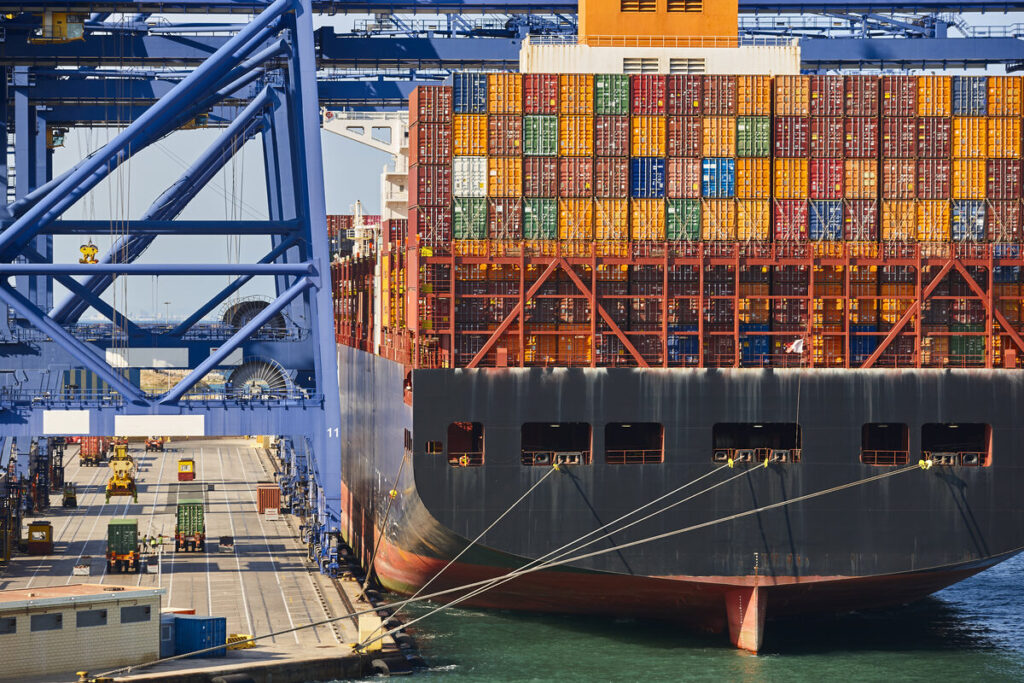
Customs Management

Key aspects of customs management in imports

In imports, customs management serves as a critical control point before goods can enter the domestic market. Errors at this stage often have immediate and tangible impacts: detained shipments, additional inspections, or subsequent financial regularizations.

One of the most sensitive aspects is tariff classification, as it determines not only the duties and taxes applicable but also potential controls or restrictions. Added to this is the correct determination of customs value and the consistency among commercial, logistical, and tax documentation.

Poorly managed imports not only result in direct costs but also affect stock planning, delivery times, and ultimately the customer experience. That’s why preventive and well-coordinated customs management is essential for maintaining the stability of the logistics chain.

Customs management in exports: compliance with international regulations

In exports, customs management ensures that goods leave the country in compliance with both national regulations and the requirements of the destination country. This process goes beyond filing an export declaration; it involves understanding trade regulations, potential restrictions, and the specific documentation required for each market.

Errors at the origin often show up at the destination, where the consequences can be more costly and harder to resolve. Blocked goods, delivery delays, or last-minute documentation adjustments directly impact the exporter’s reliability and international reputation.

Well-planned export customs management helps reduce friction, facilitate clearance at destination, and strengthen confidence in international trade operations.

Regulatory compliance in customs management: how to avoid delays and fines

Regulatory non-compliance is one of the main sources of disruption in international trade. Legislative changes, divergent interpretations, or simple administrative errors can trigger inspections, financial penalties, or immobilization of goods.

The impact of these errors is not limited to the immediate cost of a fine. Delays affect logistics planning, generate contractual tensions, and can compromise long-term business relationships. Therefore, compliance must be addressed structurally, integrated into internal processes, not merely as a reactive measure to incidents.

Document anticipation, information traceability, and constant monitoring of regulatory changes significantly reduce exposure to customs risk and ensure continuity of operations.

Strategies for efficient customs management

Efficient customs management relies on coordination between departments, process standardization, and the ability to anticipate. It is not only about streamlining procedures but about building a system that provides predictability and control in complex regulatory environments.

Optimization of customs processes: best practices

Optimization begins with early planning of clearances and regular review of the criteria used for goods classification and valuation. Document consistency and clearly defined internal procedures reduce the likelihood of errors and ease communication with customs authorities.

Moreover, collaboration with specialized logistics operators allows customs management to be integrated into a global supply chain perspective, aligning timelines, costs, and regulatory compliance. In this regard, partnering with an experienced provider adds an additional layer of operational security.

Tools and technology for efficient customs management

Technology has evolved from a tool of efficiency to a guarantor of regulatory compliance. Digital document management platforms, traceability systems, and automated declarations reduce reliance on manual processes and minimize the risk of errors.

Furthermore, data integration and predictive analysis facilitate early detection of issues and adaptation to regulatory changes. Tech-supported customs management offers greater transparency, control, and responsiveness in a constantly evolving regulatory environment.

Customs management as a competitive advantage with Suardiaz

 When viewed strategically, customs management becomes a differentiating factor in international trade. Integrating it coherently into the logistics chain allows companies to operate more securely, optimize resources, and strengthen reliability with clients and authorities.

In this context, Suardiaz supports companies in customs management as part of an integrated logistics solution. Its approach combines regulatory knowledge, operational experience, and technological support to ensure customs compliance in import and export operations, aligning with each client’s logistics and commercial goals.

Far from treating customs as an isolated checkpoint, Suardiaz integrates it into a multimodal and strategic vision of the supply chain, helping to turn regulatory complexity into a sustainable operational advantage.
Compartir:

Lastest news

empresa transitaria o freight forwarder
04/01/2026

Freight Forwarder: Functions, benefits, and how to optimize your International logistics

In international logistics, moving goods from one country to another is not just about hiring transport. Behind every…... Read more
logística del transporte aéreo
03/24/2026

Air Logistics: Types, key features and benefits

In an increasingly demanding logistics environment, where delivery times, operational continuity and reliability are critical factors, air logistics…... Read more
logistica integral centro operativo suardiaz
03/16/2026

How to Implement Integrated Logistics Solutions for the Automotive Industry

Integrated logistics has become a structural driver of business competitiveness. In an environment shaped by globalisation, margin pressure…... Read more
el futuro del bunkering gnl
02/26/2026

LNG Bunkering: A New Trend in the Maritime Industry?

LNG bunkering is the process of supplying liquefied natural gas (LNG) as fuel to ships. The term bunkering…... Read more
carbon border adjustment mechanism
02/18/2026

Carbon Border Adjustment Mechanism (CBAM) 2026: Complete Guide

The CBAM has a clear purpose: to prevent carbon leakage. This occurs when companies relocate production to countries…... Read more
09/22/2025

Maritime Vehicle Transport: Efficient Solutions for the Automotive Industry

Maritime vehicle transport is a key element in the automotive supply chain. Manufacturers, distributors, and logistics operators rely…... Read more
09/14/2025

Digitalization in Port Operations and Bunkering Management

In the context of an increasingly globalized and demanding maritime trade, the digitalization of port operations and bunkering…... Read more
08/25/2025

Naval Auxiliary Services: An Added Value in Maritime Transport

In the dynamic ecosystem of international maritime transport, auxiliary naval services play a crucial yet often overlooked role.…... Read more
08/10/2025

The Evolution of Logistics Warehousing: Trends and Best Practices

Logistics warehousing has evolved from being a mere transfer point between transport and distribution to becoming a strategic…... Read more
07/23/2025

Logistics Consulting Strategies for Renewable Energy Projects

The energy transition is driving strong growth in renewable energy projects worldwide. Onshore and offshore wind farms, photovoltaic…... Read more
07/07/2025

Impact of Using PCTC Vessels Powered by Alternative Fuels

In the context of the energy transition in maritime transport, PCTC (Pure Car and Truck Carrier) vessels are…... Read more
06/30/2025

Strategies for Efficient Ro-Ro Fleet Management in Europe

Ro-Ro (Roll-on/Roll-off) transport, specialized in moving vehicles and rolling cargo, has become a key pillar in European logistics.…... Read more
06/16/2025

The Role of Shipping Agents in Coordinating International Port Calls

Within the machinery of international maritime transport, shipping agents play a crucial role in ensuring that every port…... Read more
Consultoría Logística: Claves para la Optimización de la Cadena de Valor
06/02/2025

Logistics Consulting: Key Strategies for Optimizing the Value Chain

The growing complexity of goods flows, pressure to reduce costs, and new geopolitical and environmental challenges have highlighted…... Read more
Cómo la Logística Integrada Mejora la Eficiencia en Proyectos Industriales
05/30/2025

How Integrated Logistics Improves Efficiency in Industrial Projects

Industrial projects—such as the construction of power plants, large infrastructure, or manufacturing facilities—entail a high level of logistical…... Read more
05/18/2025

Benefits of Freight Transport Along the Atlantic and Mediterranean Corridors

The evolution of the Atlantic and Mediterranean corridors in Europe has reinforced their strategic role as key logistics…... Read more
Cómo Fomentar la Cultura Corporativa desde el Liderazgo en el Sector Logístico
05/09/2025

How to Foster Corporate Culture Through Leadership in the Logistics Sector

The success of any company in the logistics and transportation industry depends not only on operational efficiency or…... Read more
05/07/2025

Project Cargo Transportation: Overcoming One of the Biggest Challenges in Global Logistics

Project cargo transportation is one of the most complex challenges in international logistics. Moving oversized, heavy, or uniquely…... Read more
logística del transporte aéreo
05/05/2025

Trends in Air Freight: Speed and Security in Global Logistics

In a world where immediacy and reliability are critical factors in international logistics, air freight has emerged as…... Read more
Claves para una Gestión Aduanera Eficiente
03/17/2025

Keys to Efficient Customs Management: How to Simplify International Trade with Forwarding

In international trade, efficient customs management is essential to ensure the continuous flow of goods, reduce costs, and…... Read more
consolidacion de carga
03/10/2025

Cargo Consolidation: Process, benefits and applications in International logistics

Cargo consolidation is a logistics strategy that makes it possible to combine different goods or shipments into a…... Read more
Cómo Funciona el Transporte Puerta a Puerta en el Forwarding Internacional
03/04/2025

How Door-to-Door Transport Works in International Forwarding

Door-to-door transport has become a key solution in international forwarding, offering convenience, efficiency, and security to companies that…... Read more
Transporte Marítimo Internacional
02/07/2025

The Challenges and Advantages of LCL in International Maritime Transport

In the world of maritime shipping, LCL (Less than Container Load) has gained prominence as a cost-effective solution…... Read more
FCL vs. LCL: Qué modalidad de carga es más rentable para tu negocio
01/08/2025

FCL vs LCL: A Guide to Choosing the Most Cost-Effective Option in Maritime Transport

Maritime transport is one of the most widely used logistics solutions in international trade, especially when it comes…... Read more
Forwarding en la Logística Global
12/06/2024

Forwarding in Global Logistics: How to Choose the Best Partner for Your Business

International trade has experienced significant growth over the past decades, driven by globalization and the development of new…... Read more
12/03/2024

New Operational Strategies in the Maritime Sector: The Stand-Alone Trend

Emilio Martín Gasull, Product Manager of Forwarding at Suardiaz Group In the dynamic world of maritime transport, service…... Read more